Credit Cards Explained: Types, Benefits, Fees and How They Work
Credit cards are widely used for everyday purchases, online payments, travel expenses, emergencies, and other financial needs. They allow eligible cardholders to borrow money from a card issuer up to an approved credit limit and repay the amount according to the account’s terms. Depending on the card, users may also receive cashback, reward points, travel benefits, purchase protection, or other features.
However, not all credit cards work in the same way. Some are designed for people who are new to credit, while others target frequent travellers, students, business owners, shoppers, or people who want to transfer existing credit card debt to a different account. Some cards require a security deposit, while others provide access to credit without collateral.
Understanding the different types of credit cards can help you choose an option that matches your financial situation, spending habits, and repayment ability. This guide explains the major credit card categories, how each one works, their benefits and disadvantages, and the factors to consider before applying.
What Is a Credit Card?
A credit card is a payment card issued by a bank, credit union, or other authorised financial institution. It provides access to a revolving line of credit, allowing the cardholder to make eligible purchases using borrowed money rather than paying directly from an existing bank balance.
When a card issuer approves an application, it assigns a credit limit. This limit represents the maximum amount the cardholder can generally borrow at a given time, subject to the account agreement and any transaction restrictions.
For example, if a credit card has a limit of $2,000 and the cardholder makes purchases worth $400, approximately $1,600 of the limit remains available, assuming there are no other transactions or pending authorisations. When the cardholder repays the outstanding balance, the available credit may increase again.
Credit card purchases are recorded during a billing cycle. At the end of that cycle, the issuer produces a statement showing the outstanding balance, minimum payment, payment deadline, applicable interest, and any fees. The cardholder must meet the required payment conditions to keep the account in good standing.
Unlike a debit card, which generally deducts money from an available bank account balance, a credit card creates a borrowing obligation. The cardholder must repay the amount used, even when the money was spent on ordinary purchases.
How Do Credit Cards Work?
Credit cards follow a repayment system that allows eligible users to make purchases now and repay the issuer later. Understanding this process is important because the way a cardholder manages the account affects the cost of borrowing.
1. Applying for a credit card
The applicant submits information requested by the issuer, which may include identity details, residential address, income, employment, existing debts, and credit history. The issuer evaluates the application according to its eligibility rules and lending policies.
2. Receiving a credit limit
If approved, the cardholder receives a credit limit. The amount depends on the issuer’s assessment, the card product, the applicant’s financial circumstances, and other relevant factors. Approval does not guarantee a particular limit.
3. Making purchases
The cardholder can use the card at participating merchants, online stores, or other supported payment channels. Transactions reduce the available credit as they are authorised and posted to the account.
4. Receiving a monthly statement
The issuer provides a statement showing the transactions made during the billing period, the total amount owed, the minimum payment, and the due date. Depending on the product, the statement may also list interest charges, fees, rewards, and other account information.
5. Repaying the balance
The cardholder must pay at least the required minimum amount by the due date. Paying only the minimum may keep the account current, but the remaining balance can continue to attract interest. Paying the full statement balance by the due date can avoid interest on eligible purchases when the card provides a grace period and the account satisfies its conditions.
6. Reusing available credit
As payments are processed, available credit is generally restored. This revolving structure allows the cardholder to continue using the account without applying for a new loan for every purchase.
Different Types of Credit Cards
Credit cards can be classified according to their borrowing structure, intended audience, rewards, spending purpose, and eligibility requirements. Some categories overlap. For example, one card may be an unsecured student credit card that also offers cashback and has no annual fee.
The following table provides an overview of the main types of credit cards and their typical uses.
| Credit card type | Main purpose | Important consideration |
|---|---|---|
| Standard unsecured credit card | Everyday purchases and general borrowing | Approval depends on the issuer’s criteria. |
| Secured credit card | Establishing or rebuilding credit | Usually requires a security deposit. |
| Student credit card | Helping eligible students begin using credit | Student status and other conditions may apply. |
| Rewards credit card | Earning points or other benefits on purchases | Rewards must be weighed against fees and interest. |
| Cashback credit card | Receiving a percentage of qualifying spending back | Reward rates and spending caps vary. |
| Travel credit card | Travel-related rewards and benefits | Annual fees and foreign transaction charges matter. |
| Balance transfer credit card | Moving eligible debt from another card | Transfer fees and promotional deadlines apply. |
| Low-interest credit card | Reducing borrowing costs when carrying a balance | The actual interest rate and eligibility terms matter. |
| Business credit card | Managing eligible business expenses | Personal liability and reporting rules vary. |
| Student or starter secured card | Beginning credit use with a deposit | Check whether account activity is reported to credit bureaus. |
| Store credit card | Purchases at a particular retailer or retail network | Some cards have limited acceptance. |
| Charge card | Making purchases that are generally paid in full | Payment terms differ from revolving credit cards. |
| Premium credit card | Additional travel, service, and lifestyle benefits | Annual fees can be substantial. |
| Corporate credit card | Managing expenses for a company | Company policies determine permitted use. |
| Virtual credit card | Making eligible digital payments | Availability depends on the issuer and account. |
1. Standard Unsecured Credit Cards
A standard unsecured credit card provides access to a credit line without requiring the cardholder to deposit cash as collateral. The issuer evaluates the applicant’s creditworthiness and other financial information before deciding whether to approve the account.
These cards are commonly used for groceries, household purchases, subscriptions, travel bookings, online shopping, and other eligible transactions. Depending on the product, a standard card may offer basic account management tools, purchase protection, introductory interest rates, or rewards.
Benefits of unsecured credit cards
- No security deposit is normally required.
- They can be used for a broad range of eligible purchases.
- Some cards offer cashback, points, or other benefits.
- Responsible use may help establish or strengthen a credit history when the issuer reports account activity.
- Repayment can be managed through monthly statements and available payment channels.
Potential disadvantages
Approval may be difficult for applicants with limited credit history, low income, or existing financial difficulties. Interest rates and fees may also make borrowing expensive when balances are not repaid on time.
A standard unsecured credit card may suit someone who qualifies for a conventional credit product and wants a flexible payment method without tying up money in a security deposit.
2. Secured Credit Cards
A secured credit card is designed to reduce the issuer’s lending risk by requiring a security deposit. The deposit is usually held by the issuer according to the account agreement and may determine or influence the card’s credit limit.
For example, an applicant might provide a refundable deposit of $300 for a secured card with a $300 credit limit. The cardholder can then make eligible purchases using the credit line and must repay the balance under the card’s normal repayment terms.
The deposit is not the same as a payment that automatically settles every purchase. The cardholder still receives statements and remains responsible for paying the amount owed. If the account defaults, the issuer may be able to apply the deposit to the debt in accordance with the agreement and applicable law.
Who may benefit from a secured credit card?
Secured cards may be useful for people who have little credit history or are trying to rebuild their credit after previous financial problems. They can provide an opportunity to demonstrate consistent repayment behaviour.
However, a secured card does not automatically improve a credit score. The issuer’s credit reporting practices, the cardholder’s payment record, outstanding balances, and the credit scoring system all affect the result.
What should you check before applying?
- The minimum and maximum security deposit.
- Annual fees, maintenance fees, and other charges.
- Whether payments are reported to the relevant credit bureaus.
- The process for receiving the deposit back.
- Whether the account can eventually be upgraded to an unsecured card.
- The interest rate and repayment conditions.
A secured credit card is not the same as a prepaid card. A secured card provides access to credit that must be repaid, while a prepaid card generally allows spending from money loaded onto it.
3. Student Credit Cards
Student credit cards are intended for eligible students, particularly those attending college or university. They may offer an entry point into credit for applicants who have limited borrowing experience.
Depending on the issuer, student cards may feature relatively modest credit limits, no annual fee, educational resources, or rewards on selected purchases. These features are not universal, and applicants should compare the terms of each available card.
Eligibility may depend on age, enrolment status, residency, income, and other requirements. Some providers consider applicants with little or no established credit history, but student status does not guarantee approval.
Advantages of student credit cards
- They can help eligible students learn to manage borrowing.
- They may provide a way to establish a credit history.
- Some products offer rewards or low-cost account features.
- They can help students practise budgeting and payment management.
Risks students should understand
Students may have irregular income or rely on financial support from family members. Using a credit card to cover expenses without a realistic repayment plan can create debt that becomes difficult to manage.
Students should compare interest rates, fees, repayment terms, and eligibility conditions before applying. A debit card may be more appropriate for someone who is not ready to manage borrowed money.
4. Rewards Credit Cards
Rewards credit cards provide points or other benefits for eligible purchases. The rewards programme may allow cardholders to redeem accumulated points for merchandise, travel, gift cards, statement credits, or other options offered by the issuer.
Some cards offer a consistent reward rate on most eligible purchases, while others provide higher rewards in selected categories such as groceries, dining, fuel, or travel. The programme’s value depends on how points are earned and redeemed.
How rewards credit cards work
Suppose a card offers two points for every eligible $1 spent. A cardholder who makes $500 in qualifying purchases could earn 1,000 points, subject to the programme’s conditions. The actual monetary value of those points depends on the redemption options available.
Rewards may be subject to exclusions, minimum redemption amounts, expiry rules, spending caps, and other restrictions. Some transactions, including cash advances or certain fees, may not earn rewards.
Advantages and disadvantages
The main advantage is the opportunity to receive additional value from purchases that the cardholder already planned to make. Some rewards programmes also provide flexibility in how points are redeemed.
The disadvantage is that a cardholder may pay more in annual fees or interest than the rewards are worth. Spending extra to earn points can also undermine the value of the programme.
A rewards credit card is most suitable when its benefits match existing spending habits and the cardholder can manage repayments responsibly.
5. Cashback Credit Cards
A cashback credit card returns a percentage of eligible spending to the cardholder. Depending on the issuer, cashback may be provided as a statement credit, deposit, reward balance, or another permitted form of redemption.
Some cards provide a flat cashback rate on eligible purchases. Others offer different rates for specific spending categories or allow users to activate rotating reward categories.
Example of cashback earnings
If a card offers 2% cashback on qualifying purchases and the cardholder spends $400 in eligible transactions, the potential cashback is $8, assuming there are no category restrictions or spending caps.
This example is illustrative. Actual rewards depend on the card’s terms, eligible transactions, and redemption conditions.
What to compare
- The cashback rate for everyday purchases.
- Higher reward rates for specific categories.
- Monthly or annual cashback limits.
- Minimum redemption requirements.
- Annual fees and other account charges.
- Introductory offers and the conditions attached to them.
Cashback cards are often attractive to people who want straightforward rewards rather than managing a points programme. However, paying interest on carried balances can easily outweigh the cashback received.
6. Travel Credit Cards
Travel credit cards are designed for people who regularly pay for flights, hotels, transport, and other travel-related expenses. Some earn travel points or airline miles, while others provide cashback or benefits associated with travel purchases.
Depending on the product, benefits may include airport lounge access, travel insurance, hotel privileges, airline-related rewards, or credits for eligible travel expenses. Not every travel card includes these features, and conditions may apply.
Common benefits of travel credit cards
- Earning points or miles on eligible purchases.
- Redeeming rewards for flights, accommodation, or other travel expenses.
- Potential travel insurance or purchase protection benefits.
- Access to selected airport lounges or travel services on qualifying cards.
- Possible savings on foreign transaction fees.
Possible drawbacks
Travel credit cards may have higher annual fees than basic cards. Benefits can also depend on spending thresholds, travel bookings made through specific channels, eligible airlines, or other conditions.
People who travel infrequently may not receive enough value to justify a premium fee. Before applying, compare the benefits you are likely to use with the total annual cost of holding the card.
7. Balance Transfer Credit Cards
A balance transfer credit card allows a cardholder to move eligible debt from one credit card account to another. Some issuers offer a temporary promotional interest rate on transferred balances to attract applicants.
The purpose is often to reduce interest costs and make existing debt easier to repay. However, the savings depend on the transfer fee, promotional period, post-promotion interest rate, and repayment plan.
How balance transfers work
Suppose a person owes $2,000 on an existing credit card with a high interest rate. Another issuer offers a balance transfer promotion with a lower introductory rate for a limited period. If the person qualifies, the eligible debt may be transferred to the new card, subject to the issuer’s terms and transfer limit.
The new card may charge a balance transfer fee, even when the introductory interest rate is low or zero. The promotional rate may also expire before the balance is fully repaid.
Important balance transfer considerations
- Check the balance transfer fee before accepting an offer.
- Confirm how long the promotional interest rate lasts.
- Understand the rate that applies after the promotion ends.
- Check whether the transfer amount fits within the available credit limit.
- Continue making required payments on every account until the transfer is confirmed.
- Avoid building new debt on the old card after transferring the balance.
A balance transfer does not erase debt. It changes where the debt is held and may reduce its cost if the terms are favourable and the borrower follows a realistic repayment plan.
8. Low-Interest Credit Cards
Low-interest credit cards are designed for people who want a relatively low borrowing rate compared with other available card products. They may be useful to cardholders who occasionally need to carry a balance from one billing cycle to another.
Some low-interest cards offer a lower ongoing rate, while others provide an introductory rate for a limited period. The advertised rate may depend on the applicant’s creditworthiness, and different transaction types can have different interest rates.
Before choosing a low-interest card, compare the purchase APR, cash advance APR, balance transfer APR, annual fee, and any promotional conditions.
A low-interest card is not necessarily the cheapest option for everyone. Someone who consistently pays the full statement balance and receives a grace period may place greater importance on annual fees, rewards, and other features.
9. Business Credit Cards
Business credit cards are intended for eligible business owners, self-employed professionals, and companies that need to manage business-related spending. They can help separate business purchases from personal transactions and simplify expense tracking.
Depending on the issuer, business cards may offer employee cards, expense reporting, purchase categories tailored to businesses, cashback, travel rewards, or other account management features.
Benefits of business credit cards
- Separating eligible business expenses from personal purchases.
- Reviewing transactions and preparing expense reports.
- Giving authorised employees access to company spending facilities.
- Potentially earning rewards on eligible business purchases.
- Managing recurring operational expenses through a single account.
Business credit cards can also create risks. The business or individual responsible for the account must repay the balance under the card agreement. Some products require a personal guarantee, meaning the business owner may remain personally responsible for the debt in specified circumstances.
Applicants should review the issuer’s requirements, liability provisions, employee spending controls, fees, and reporting practices before selecting a business card.
10. Store Credit Cards
Store credit cards are associated with a particular retailer or retail group. They may offer discounts, promotional financing, loyalty rewards, or special offers on qualifying purchases.
Some store cards can only be used at the issuing retailer or within a limited retail network. Others operate on a broader payment network and can be used at participating merchants outside the retailer.
Advantages of store credit cards
- Potential discounts on eligible purchases.
- Special offers for participating customers.
- Rewards tied to a retailer’s loyalty programme.
- Promotional financing on selected purchases, subject to terms.
The main limitation is that store-specific benefits may encourage customers to spend more at one retailer than they otherwise would. Promotional financing can also be expensive if the balance is not repaid according to the offer’s requirements.
Compare the interest rate, promotional conditions, acceptance restrictions, and value of the rewards before applying.
11. Charge Cards
A charge card resembles a credit card because it allows eligible purchases to be made without immediate payment. However, traditional charge cards generally require the full statement balance to be paid by the due date instead of allowing the cardholder to carry a revolving balance under ordinary terms.
Some modern products offer instalment or flexible payment features, so the specific agreement should always be reviewed rather than assuming all charge cards follow identical rules.
How charge cards differ from credit cards
A conventional revolving credit card allows the cardholder to carry part of the balance forward, subject to the account terms and interest charges. A traditional charge card generally requires full payment of the statement balance each billing period.
Charge cards may suit people who want to consolidate eligible purchases into a monthly bill and have sufficient funds to pay the balance in full. However, annual fees and late payment charges may apply, and missing a payment can have serious consequences.
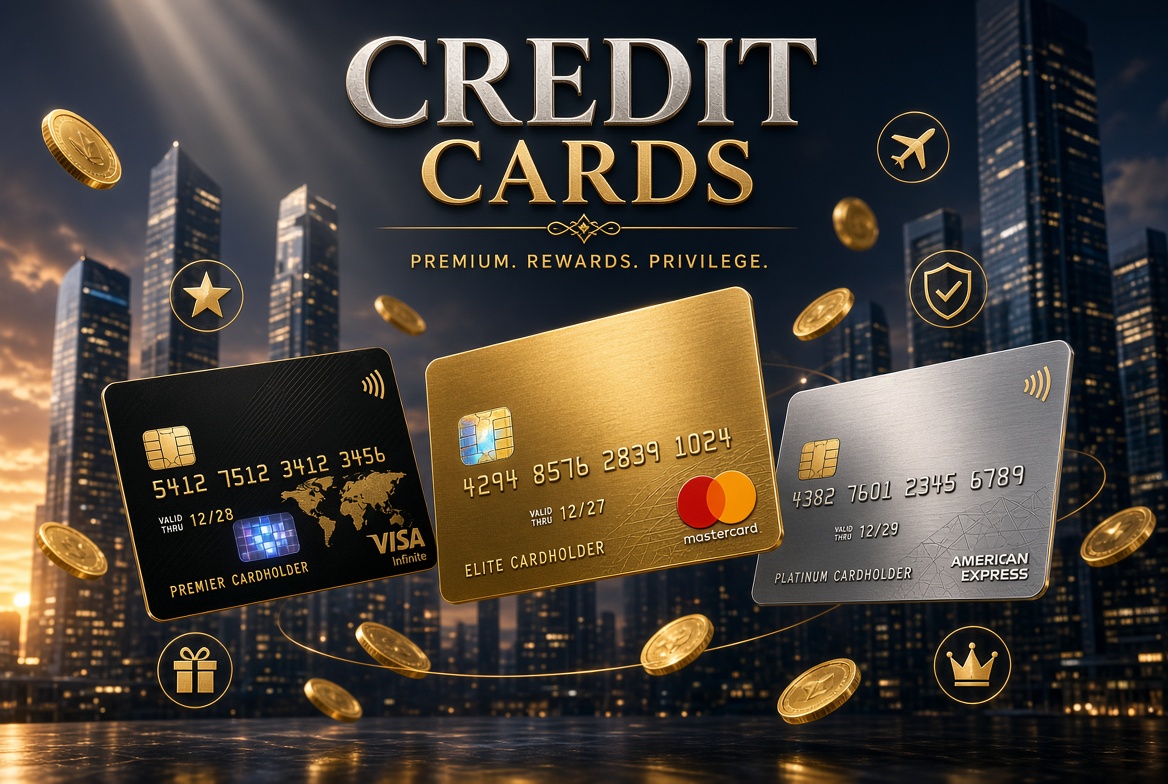
12. Premium and Luxury Credit Cards
Premium credit cards target customers who want additional services, travel privileges, rewards, or higher-tier account benefits. Depending on the product, these cards may offer airport lounge access, travel credits, hotel benefits, concierge services, insurance coverage, or enhanced rewards.
Some premium cards require strong creditworthiness, a qualifying income profile, an invitation, or other issuer-specific conditions. Eligibility varies, and paying a high annual fee does not guarantee approval.
The value depends on the benefits the cardholder actually uses. A frequent traveller may appreciate lounge access or travel credits, while someone who rarely travels may receive little practical value from the same benefits.
To evaluate a premium card, calculate the annual fee and compare it with the realistic value of the benefits you expect to use. Do not count a benefit as a saving if it encourages spending you would not otherwise make.
13. Corporate Credit Cards
Corporate credit cards are generally issued through arrangements between a card provider and a company. They are designed to support business expenses such as travel, accommodation, office supplies, and other authorised purchases.
Unlike many small-business cards, corporate card programmes may include centralised billing, spending controls, employee expense reports, transaction monitoring, and company-wide administration tools.
The company determines who can receive a card and what expenses are permitted. Depending on the programme, the company, employee, or another designated party may be responsible for payment.
Employees should understand the organisation’s expense policy, documentation requirements, transaction limits, and repayment procedures before using a corporate card.
14. Virtual Credit Cards
A virtual credit card is a digital version of a credit card or a digital card credential associated with an eligible credit account. It can be used for supported online purchases or other transactions where the issuer and merchant accept the digital credential.
Some virtual cards use a separate card number or allow users to generate numbers for particular transactions or merchants. Others are digital representations of an existing physical card. Features depend on the issuer.
Benefits of virtual credit cards
- Convenient online payments without always entering physical card details.
- Potentially improved control over where certain card credentials are used.
- Support for eligible digital wallets or mobile payment services.
- Reduced need to carry a physical card for supported transactions.
Virtual cards do not eliminate every security risk. Users should protect their accounts, enable available security alerts, and contact the issuer if they notice suspicious activity. Not all virtual cards support in-store payments, cash withdrawals, or recurring transactions.
15. Student and Starter Credit Cards for Beginners
People who are new to borrowing may encounter starter credit cards designed to provide a simpler entry point into credit. Depending on the issuer, these may include student cards, secured cards, or unsecured cards intended for applicants with limited credit history.
Starter cards may offer relatively modest limits and fewer premium benefits than advanced rewards or travel cards. This can be useful because the main objective is to learn how credit works and establish consistent repayment habits.
Applicants should compare the total cost, eligibility rules, security deposit, credit reporting, and opportunities to upgrade the account. A card with a modest limit and manageable fees can be more useful than one with expensive features that the user does not need.
Other Credit Card Categories and Features
Some credit cards are marketed around a particular feature rather than a distinct borrowing structure. These categories can overlap with the card types already discussed.
Zero or low introductory APR cards
These cards offer a reduced interest rate for a limited introductory period on eligible purchases, balance transfers, or both. The promotion ends according to the account terms, after which the standard rate may apply. Cardholders should calculate whether they can repay the relevant balance before the promotion expires.
No-annual-fee credit cards
These cards do not charge a standard annual membership fee. They may be attractive to occasional users or people who want to keep fixed costs low. However, other fees and interest charges can still apply, and no annual fee does not necessarily mean the card is free to use.
Airline credit cards
Airline credit cards typically focus on a particular airline or related loyalty programme. They may provide airline miles, travel-related discounts, or other benefits. The value depends on eligible spending, redemption rules, route availability, and any annual fee.
Hotel credit cards
Hotel credit cards may reward spending with points or benefits associated with a hotel loyalty programme. Potential features include hotel points, room-related privileges, or other qualifying benefits. Restrictions, blackout dates, availability, and programme rules can affect their usefulness.
Fuel and grocery rewards cards
These cards offer rewards on selected everyday spending categories. They can benefit people whose normal purchases align with the reward structure, but category definitions, merchant eligibility, and spending caps should be checked.
Credit Cards vs. Debit Cards
Credit cards and debit cards may look similar, but the source of the money and the repayment obligations are different. A credit card generally provides borrowing, while a debit card typically accesses money already available in a linked bank account.
| Feature | Credit card | Debit card |
|---|---|---|
| Source of funds | Approved credit line | Available funds in a linked account, subject to the card terms |
| Repayment | Outstanding borrowing must be repaid | Transactions generally deduct from available funds |
| Interest | May apply to carried balances and certain transactions | Normally no credit card interest because purchases use available funds |
| Credit history | May help establish credit if account activity is reported | Ordinary debit transactions generally do not establish borrowing history |
| Spending limit | Determined by the credit limit and transaction rules | Usually determined by available funds and applicable bank limits |
| Debt risk | Can create debt if spending exceeds repayment ability | Generally limits spending to available money, though overdrafts may be possible |
The appropriate choice depends on financial goals and spending habits. A debit card may be preferable for someone who wants to spend only available funds. A credit card may be useful for an eligible person who can manage repayments and understands the costs.
Credit Card Fees and Charges Explained
Before choosing a credit card, review its complete fee schedule. A card with attractive rewards or a low introductory rate can still become expensive if other charges are overlooked.
| Fee or cost | Meaning |
|---|---|
| Annual fee | A recurring fee charged for maintaining the card account. |
| Purchase interest | Interest that may apply to eligible purchases when the balance is not repaid under the account’s grace-period conditions. |
| Cash advance fee | A charge that may apply when obtaining cash through the credit card. |
| Balance transfer fee | A charge for moving eligible debt from another credit account. |
| Foreign transaction fee | A charge that may apply to certain transactions processed in foreign currencies or outside the cardholder’s home market. |
| Late payment fee | A charge that may apply when a required payment is not received by the deadline. |
| Returned payment fee | A charge that may apply when a payment fails or is reversed under the account terms. |
| Over-limit charge | A charge that may apply under certain products and applicable rules when transactions exceed permitted limits. |
Not every card charges all these fees. Some charges are restricted by local law, and the applicable rules differ between countries. Read the cardholder agreement and fee schedule before accepting an offer.
Understanding APR and Credit Card Interest
APR stands for annual percentage rate. It is a standard measure used to express the annual cost of borrowing and helps consumers compare credit products. For credit cards, the agreement may list different APRs for purchases, cash advances, balance transfers, and promotional periods.
Interest is commonly calculated using the applicable balance and the issuer’s calculation method. Some issuers calculate interest daily. The actual amount charged depends on the rate, balance, transaction type, billing period, and account terms.
Many cards offer a grace period on eligible purchases. When the account qualifies for that grace period and the cardholder pays the full statement balance by the due date, interest on those purchases may be avoided. Cash advances and some balance transfers often have different interest conditions.
Paying only the minimum payment can reduce the amount immediately due, but it may leave the cardholder paying interest for an extended period. Whenever possible, plan purchases around the amount that can be repaid without creating financial hardship.
How to Choose the Right Credit Card
The right credit card depends on your financial circumstances, credit history, intended use, and ability to repay. Rather than choosing a card simply because it is popular, compare its features with your actual needs.
Identify your main purpose
Decide whether you want to establish credit, earn cashback, collect travel rewards, manage business expenses, transfer debt, or make everyday purchases. Different goals point towards different card categories.
Compare the total cost
Review the annual fee, purchase APR, balance transfer fee, cash advance charges, foreign transaction fee, and other costs. A low-cost card can be preferable to a premium card if you will not use its additional benefits.
Check eligibility before applying
Read the issuer’s eligibility requirements and consider whether you meet them. Applying without checking may result in rejection, and applications may affect credit records differently depending on the country and application process.
Evaluate the rewards realistically
Estimate the value of rewards using spending you already expect to make. Do not increase spending just to earn points, cashback, or an introductory bonus.
Understand the repayment terms
Confirm the minimum payment, due date, grace period, and interest rates for different transaction types. Make sure the payment arrangement fits your income and budget.
Review customer support and security
Check the issuer’s available support channels, transaction alerts, card-locking features, dispute process, and procedures for reporting a lost or stolen card. These services can matter when a payment problem or suspected fraud occurs.
How to Apply for a Credit Card
The application process varies by country and issuer, but most applicants follow a similar sequence.
- Research available cards: Compare products that match your purpose and financial circumstances.
- Review eligibility requirements: Check minimum age, residency, income, credit history, and any other conditions.
- Prepare the required information: This may include identity documents, address details, employment information, and income evidence.
- Submit the application: Use the issuer’s official website, authorised application channel, or branch where available.
- Wait for the decision: The issuer may approve, reject, or request additional information.
- Review the agreement: If approved, examine the credit limit, APRs, fees, payment conditions, and other terms.
- Activate and secure the card: Follow the issuer’s instructions and protect the card details and account credentials.
Never provide sensitive account information to an unverified website or person promising guaranteed approval. A legitimate application should clearly explain the provider, eligibility conditions, costs, and terms of the credit product.
Tips for Managing a Credit Card Responsibly
Responsible credit card use begins with a realistic budget and a clear understanding of how repayment works. These habits can help reduce unnecessary charges and keep borrowing under control.
- Spend within a budget based on money you can reasonably repay.
- Pay the full statement balance by the due date when possible.
- At minimum, make the required payment on time to avoid preventable late-payment consequences.
- Set reminders or automatic payments where suitable and ensure sufficient funds are available.
- Review every statement for unfamiliar purchases, fees, and errors.
- Avoid cash advances unless you understand their cost and repayment terms.
- Keep card numbers, PINs, passwords, and one-time verification codes private.
- Report lost cards and suspicious transactions promptly to the issuer.
- Review account alerts and notify the issuer when contact details change.
- Do not apply for multiple cards without considering fees, eligibility, and the effect on your financial situation.
Credit limits should not be treated as spending targets. A large available limit does not mean that the cardholder can comfortably afford to repay the full amount.
Common Credit Card Mistakes to Avoid
Paying only the minimum every month
Minimum payments help keep an account current when paid on time, but they may not reduce the balance quickly. Interest can accumulate while the remaining debt continues to be carried forward.
Ignoring the card agreement
Applicants sometimes focus on rewards and introductory offers while overlooking annual fees, interest rates, transfer fees, and promotional expiry dates. Read the complete agreement before accepting the card.
Using a credit card to cover unaffordable spending
A credit card can help with payment timing, but it does not increase a person’s underlying income. Repeatedly borrowing to cover expenses without a repayment plan can create long-term financial pressure.
Missing payment deadlines
Late payments may result in fees, additional interest, and negative credit reporting, depending on the issuer and local rules. Payment reminders can help prevent avoidable mistakes.
Chasing rewards without checking the cost
Cashback and points are only useful when their value exceeds the costs and risks involved. Interest charges can quickly outweigh the benefits of rewards earned through spending.
Applying for a card without checking eligibility
Every issuer has its own requirements. Review the conditions before applying instead of relying on advertising language or promises of guaranteed approval.
Frequently Asked Questions About Credit Cards
What are the main types of credit cards?
Common types include standard unsecured cards, secured cards, student cards, rewards cards, cashback cards, travel cards, balance transfer cards, low-interest cards, business cards, store cards, charge cards, premium cards, corporate cards, and virtual credit cards. Some categories describe the card’s structure, while others describe its audience or benefits.
Which type of credit card is best for beginners?
A beginner may consider a student card, a starter unsecured card, or a secured credit card, depending on eligibility and financial circumstances. Compare fees, interest rates, credit reporting, and repayment requirements before applying.
What is the difference between a secured and unsecured credit card?
A secured card generally requires a security deposit, while an unsecured card normally does not. Both provide access to credit that must be repaid. Approval requirements and account features vary by issuer.
Are cashback credit cards better than rewards credit cards?
Neither is automatically better. Cashback cards return a portion of eligible spending, while other rewards cards may offer points, miles, or different redemption options. The better choice depends on your spending habits, redemption preferences, fees, and interest costs.
Can a credit card help build a credit history?
Yes, it may help when the issuer reports account activity to relevant credit bureaus and the account is managed responsibly. Paying on time and keeping borrowing manageable can support a positive record, but results are not guaranteed.
Do all credit cards charge annual fees?
No. Some cards have no annual fee, while others charge for membership or premium benefits. Even a card with no annual fee may charge interest, late fees, or transaction-related fees.
What happens if I only pay the minimum amount?
Paying the minimum by the due date may keep the account current, subject to the agreement. However, interest may continue to accrue on the unpaid balance, and repayment can take much longer than if you paid more.
Can I withdraw cash using a credit card?
Some credit cards permit cash advances, but they may carry a separate fee and a higher interest rate. Interest often starts immediately on cash advances rather than after a purchase grace period. Check the agreement before using this feature.
What is a balance transfer credit card?
A balance transfer card allows eligible debt from another credit card to be moved to a new account. Some offer introductory interest rates, but transfer fees, credit limits, promotional deadlines, and post-promotion rates affect whether the transfer saves money.
Is a charge card the same as a credit card?
They are similar but not identical. Traditional charge cards generally require the full statement balance to be paid by the due date, while revolving credit cards typically allow part of the balance to be carried forward subject to interest and account terms.
Can I have more than one credit card?
Some people hold multiple credit cards, but whether this is appropriate depends on their financial situation, fees, eligibility, and ability to manage several payment deadlines. More cards do not automatically mean better credit or greater financial security.
What should I do if my credit card is lost or stolen?
Contact the issuer immediately using its official support channel, and lock or freeze the card through the available service if possible. Review recent transactions and report any unauthorised activity promptly. Liability rules and reporting deadlines vary by jurisdiction and card agreement.
Conclusion
Credit cards come in many forms, and each category serves a different purpose. Standard unsecured cards provide general purchasing flexibility, secured cards may help eligible applicants establish credit, and student cards offer a possible entry point for students. Cashback and rewards cards focus on purchase benefits, while travel cards provide travel-related features. Balance transfer and low-interest cards may help some borrowers manage financing costs, and business or corporate cards support eligible business expenses.
The right choice depends on your needs, financial circumstances, eligibility, and ability to repay. Before applying, compare the annual fee, interest rates, transaction charges, rewards conditions, and repayment requirements. Understand how the card works and read the agreement carefully.
Most importantly, use a credit card as a payment and borrowing tool rather than as extra income. Responsible spending, timely payments, regular statement reviews, and a realistic budget can help you make better financial decisions and avoid unnecessary debt.