UNITED BANK FOR AFRICA (UBA) SWIFT CODE IN NIGERIA – UNAFNGLA
UNITED BANK FOR AFRICA (UBA) SWIFT CODE IN NIGERIA – UNAFNGLA: The Complete Guide
Every international transfer into or out of a Nigerian bank account depends on one identifier: the SWIFT code. For United Bank for Africa the code is UNAFNGLA, and when a form demands eleven characters it becomes UNAFNGLAXXX. Get these letters right and your money follows the shortest route to the correct bank.
UBA is one of the biggest banks in Nigeria, with its head office at UBA House on Marina, Lagos. That scale means foreign payments of every kind land on its books daily: salaries, family support, school fees, supplier invoices and freelance income. Each of those payments must be tagged with the right bank identifier, or it stalls.
This guide explains the code letter by letter, shows which version to use and when, and walks through receiving and sending money step by step. It also covers charges, delays, tracking, fraud and the mistakes that cause most failed transfers.
1UBA SWIFT Code at a Glance
Start with the facts. Everything else in this guide builds on this table.
| Bank | United Bank for Africa Plc |
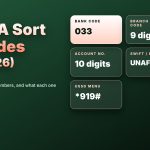
| SWIFT code (8 characters) | UNAFNGLA |
| SWIFT code (11 characters) | UNAFNGLAXXX |
| Head office | UBA House, 57 Marina, Lagos |
| Country | Nigeria |
2What the Code UNAFNGLA Stands For
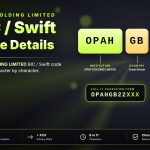
A SWIFT code, also called a Business Identifier Code or BIC, is built from separate parts, and UNAFNGLA is no exception. Reading it piece by piece removes all mystery:
- UNAF is the bank code and stands for United Bank for Africa
- NG is the country code for Nigeria
- LA is the location code and points to Lagos, where the head office sits
- XXX, when added, marks the head office rather than a particular branch
38-Character Versus 11-Character Format
The eight-character form, UNAFNGLA, identifies the bank and its head office location. The eleven-character form adds a three-character branch ending. For the head office that ending is XXX, so the full version reads UNAFNGLAXXX. Both point to the same place for general purposes.
Some payment forms accept only eight characters, others insist on eleven. Use whichever the form asks for, and never invent the missing characters yourself.
4What SWIFT Means and What It Does
SWIFT stands for Society for Worldwide Interbank Financial Telecommunication. It is the messaging network that banks use to tell each other who is paying whom, how much, and into which account. Money does not travel inside the message. The message instructs the banks to move the funds, and the code tells the network which bank is the destination.
In practice, the sending bank reads your details, matches the SWIFT code to the bank in its directory and builds a payment message around it. If the code, the bank name and the address do not agree with each other, an automated check can pause the payment for manual review, and that review is where days are lost.
5UBA Head Office Details
When a sending bank or an online transfer form asks for the beneficiary bank address, give the head office address: UBA House, 57 Marina, Lagos, Nigeria. Pair it with the bank name written in full as United Bank for Africa Plc, so the code and the name agree on every field.
6How to Receive Money From Abroad Into a UBA Account
Receiving is simple when you hand the sender complete details. Give them the points below, written exactly as they appear on your account:
- Your full account name, spelled as the bank holds it
- Your ten-digit UBA account number
- The bank name, United Bank for Africa Plc
- The SWIFT code UNAFNGLA, or UNAFNGLAXXX if eleven characters are required
- The bank address in Marina, Lagos
- The currency the sender intends to use
Treat the account details as a unit. When someone sends you money, ask them to copy the information from your message instead of retyping it, and ask them to check the account name against the bank’s record. A transfer with one character wrong in the name can be returned even when the code and the account number are perfect.
7How to Send Money Abroad From a UBA Account
For an outgoing transfer, the roles flip. You collect the recipient’s bank details, including their own bank’s SWIFT code, and submit them through your UBA channel or a branch. Foreign payments carry documentation requirements, so be ready to state the purpose of the transfer and, for larger amounts, to present supporting documents.
Before you submit anything, confirm the beneficiary details with the recipient by a second method, such as a phone call or a saved invoice. Payments sent by SWIFT are hard to pull back once they leave, so five minutes of checking is worth more than days of chasing a correction.
8Details You Need Besides the SWIFT Code
The code only identifies the bank. A complete international transfer also needs:
- The beneficiary’s full name and address
- The beneficiary’s account number
- The beneficiary bank’s full name and address
- The amount and the currency
- The purpose of payment and any invoice or reference number
9Does UBA Use an IBAN?
Nigeria does not operate on the IBAN system. Where a foreign sender asks for an IBAN, give the ten-digit account number together with the SWIFT code and leave the IBAN field empty or follow the sender’s note for countries without IBAN. Never fabricate an IBAN, because a made-up number will be rejected.
10Branch-Specific SWIFT Codes
Beyond the head office code, UBA branches can carry their own three-character endings. A branch code replaces XXX and points the payment to a named office. It is useful when a sender or a bank specifically requests it, but it is rarely compulsory for an ordinary personal transfer.
11Which Code to Use When in Doubt
If nobody has given you a branch code, use UNAFNGLA or UNAFNGLAXXX. The head office code works for routing, and your account number completes the job by identifying the exact account. Use a branch code only when the sender, a bank officer or a contract tells you to.
12Naira Accounts and Foreign Currency Accounts
The same SWIFT code serves the bank, but the account type affects the result. A foreign currency account keeps incoming dollars, pounds or euros in their original currency. A naira account receives the converted value at the prevailing rate. Decide which one you want before you give the details to the sender.
Keep the structure of your own payment simple. Use one currency, one set of beneficiary details and one clear reference. The fewer special instructions a payment carries, the less likely it is to be held by an intermediary for clarification.
13Correspondent and Intermediary Banks
Many foreign payments pass through one or more intermediary banks before reaching Nigeria. Their role is routing, and they may deduct a fee along the way. You usually do not need to name them, as the sending bank selects the path. If a sender asks, advise them to follow the standard route for payments to UNAFNGLA.
14How Long an International Transfer Takes
A typical transfer needs a few working days, though the exact time depends on the currency, the sending bank, intermediary banks, compliance checks and public holidays in either country. Weekends do not count as processing days. Incomplete details are the biggest cause of extra waiting.
15Charges and Exchange Rates
Costs come from three places: the sending bank’s fee, any intermediary deduction and the exchange rate applied when the money converts. Ask for the full cost breakdown before you confirm. Where the sender can choose who bears the charges, state your preference clearly so the amount that arrives matches your expectation.
Keep a record of every transfer in a single place. Note the date, the amount, the currency, the reference and the details you gave. When a payment has not arrived in the expected time, that record lets the bank trace it quickly instead of asking you to rebuild the information from memory.
16How to Track an International Transfer
Tracking needs three things from the sender: the payment reference, the amount with its currency and the payment date. Banks also use a transaction message that carries a unique tracking number. Hand these details to your UBA branch or support channel, and they can follow the payment along its route.
17Common Mistakes With the UBA SWIFT Code
- Typing UNAFNGLA with a wrong or missing letter
- Using a code that belongs to a different Nigerian bank
- Adding random characters to make the code eleven characters long
- Writing a branch ending that does not exist
- Leaving out the account number or spelling the account name differently from the bank’s record
Prevention is cheaper than repair. Read the code aloud letter by letter against this guide before you press submit, and paste it from a saved copy rather than typing it each time. Familiar codes are easy to mistype when you are rushing, and one wrong letter changes the destination completely.
18What Happens When the Wrong Code Is Used
A wrong code may delay the payment, send it to the wrong bank or cause a rejection. Rejected funds usually return to the sender, minus fees. If you notice an error after submission, contact the sending bank at once, because early action gives the best chance of correcting or recalling the payment.
19Staying Safe From Transfer Fraud
- Confirm the code from your own bank or your own account records, never from a stranger’s message
- Be careful with last-minute changes to payment details in emails
- Never share your online banking password, token or card PIN
- Treat urgent demands for fees before a transfer as a warning sign
20Business and Trade Payments
Companies that import, export or supply services should print the SWIFT code, the full account name, the account number and the bank address on every invoice. That block of details cuts back-and-forth with overseas clients and speeds up reconciliation when the payment lands.
Freelancers who invoice clients abroad should also state the currency on the invoice and the exact amount expected, so the client’s bank can send the right figure the first time. Families supporting students overseas can save time by keeping the full payment instructions in one note and updating it whenever any detail changes.
21Students, Families and Freelancers
Individuals use the same code for tuition payments, family support and freelance income. Keep a saved copy of your full payment details, including UNAFNGLA, and send it as a single message so nothing is retyped by hand.
22Quick Checklist Before You Send or Receive
- Code written as UNAFNGLA or UNAFNGLAXXX, as the form requires
- Account name matches the bank’s record exactly
- Ten-digit account number checked twice
- Currency and amount confirmed
- Purpose of payment stated clearly
23Frequently Asked Questions
What is the SWIFT code of UBA in Nigeria? It is UNAFNGLA, or UNAFNGLAXXX in the eleven-character format.
Is UNAFNGLA the same as UNAFNGLAXXX? Yes for general use. XXX marks the head office.
Can I use the code for dollar transfers? Yes. The same bank code applies to transfers in any currency the bank accepts.
Is the SWIFT code the same as my account number? No. The code identifies the bank, while the account number identifies you.
Do I need a different code for each branch? No. Use the head office code unless a branch code is specifically requested.
One last habit worth building is to store the code where you can reach it fast. Keep UNAFNGLA and UNAFNGLAXXX in a phone note, together with the bank name and the Marina address, so that every request for your bank details is answered in seconds and with the same correct characters every time.
24Final Word
The UBA SWIFT code is UNAFNGLA, with UNAFNGLAXXX as the full eleven-character form. Pair it with the exact account name, the ten-digit account number and the correct bank address, check every character once more, and your international payments will reach UBA without delay.